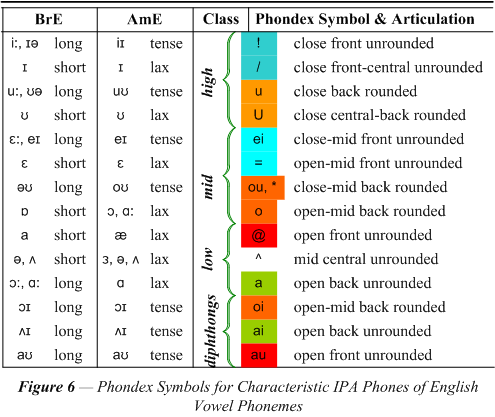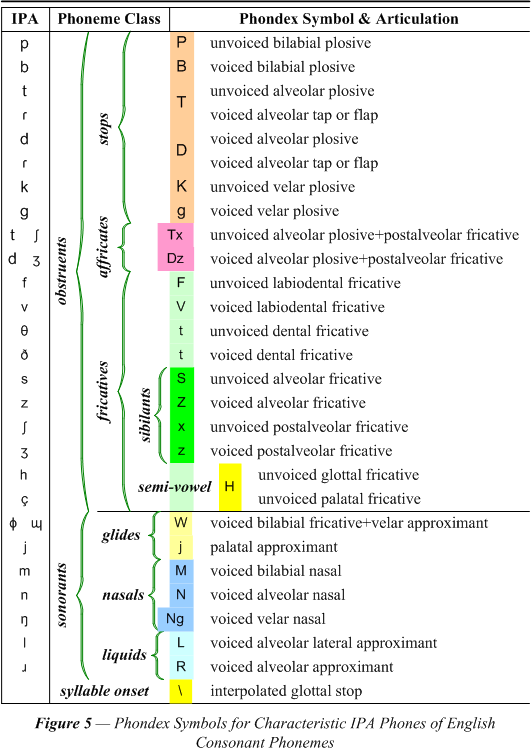
3.2.1.1 A phonology of English. The phonological structure of English is far too complex to cover in any great detail here. This cursory outline is intended to direct the person who is already acquainted with English phonology in understanding Phondex rules better. English has two commonly cultivated and imitated dialects: the Received Pronunciation (BrE) and the General American (AmE) variety. Whereas the two dialects have many common traits in their treatment of consonants, the two vary most distinctly in the nature of the vowels. Figures 5 and 6 list the principal IPA phones on the left along with the various phonemes of English on colored backgrounds. These phonemes exist auditorily, i.e., only in the ear, but linguists customarily use symbols of the closest articulatory and acoustic sounds to represent them. Phondex generalizes these sounds to some extent, disregarding some of the distinctions that in other contexts would be very important to make.
I will plead ignorance of the full value and use of the backward slash to indicate the onset of the first syllable of a name. The linguist that worked on these Phondex rules was never able to make it clear to me. I believe that he being a native German heard a sound that was not there phonemically, but one needed for his analysis. Such differences in interpretation are what give rise to the need for Phondex in the first place.